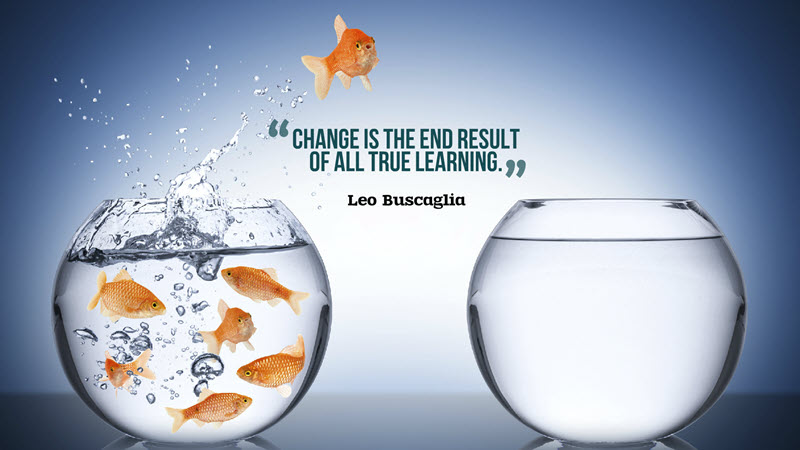
“Change is the only constant in life.” ~ Heraclitus, 535 BC
I just realized that it has been 50 years (1973 – 2023) since I graduated from high school and there have been many changes over the years. What follows are my experiences relearning mathematics after retirement, tutoring and substitute teaching, and limiting my discussion to Mathematical Concepts, Teaching and College. Why these three? As I look back, I have concluded, with my 14+ years of education, I was not taught mathematical concepts, how to use the mathematics, and how I “failed” college. The following observations may not be indicative of every subject or school but what I have noted over the past few years.
There is a massive gap between school and work, between learning and earning. While the labor market rewards good grades and fancy degrees, most of the subjects schools require simply aren’t relevant on the job. Literacy and numeracy are vital, but few of us use history, poetry, higher mathematics or foreign languages after graduation. The main reason firms reward education is because it certifies (or “signals”) brains, work ethic and conformity.
Bryan Caplan – professor of economics at George Mason University
Mathematical Concepts
Let’s start this topic by establishing common ground on the meaning of mathematical concepts, conceptual learning and conceptual understanding.
Conceptual learning in mathematics focuses on teaching math by concepts rather than asking students to memorize isolated facts, methods, or formulas. Concepts are the big ideas or the “why’s” related to solving math problems. Addition/subtraction and decimals/fractions are both recognizable examples. Another way to look at conceptual learning is that it means teaching math as a language. If you have ever learned another language, you know that the best approach is to experience speaking in the context of that language. The philosophy behind teaching conceptually is that students who learn this way understand mathematical ideas and then transfer their understanding to new contexts and problems. [5]
The term “conceptual understanding” refers to a comprehensive and practical grasp of mathematical concepts. Children who understand concepts are aware of more than isolated facts and methods. They comprehend why a mathematical concept is significant and how it can be applied in various situations. They organize their knowledge into a logical structure that allows them to learn new concepts by connecting them to what they already know. Understanding the concepts also helps with retention because facts and methods are easier to remember and apply when learnt through understanding, and may be reconstructed if lost.
Conceptual understanding entails teaching children not only how to do something but also why they should do it. Through conceptual understanding, children can see the bigger picture that underlies all math topics and exercises, allowing them to think in a fluid way, use their math skills in a variety of contexts, and utilize higher-order thinking skills. [6]
Let’s use arithmetic as an example since arithmetic concepts are pretty much the foundation of mathematics. Arithmetic includes addition, subtraction, multiplication, division, exponentiation, roots, exponents, logarithms, and modulus operations. Along with these operations are the three main properties:
This concept is essential when dealing with other mathematical branches, e.g., matrix theory. For example, one of the biggest differences between real number multiplication and matrix multiplication is that matrix multiplication is not commutative. In other words, in matrix multiplication, the order in which two matrices are multiplied matters! However, matrix addition does not include the distributive property but does include the other arithmetic properties. What’s the lesson? Understanding the concepts of arithmetic and knowing how to apply them benefits the student when learning other branches of mathematics, e.g., geometry, algebra and trigonometry.
Here is the problem. When I was in school, and even now, some teachers teach the mechanics (e.g., use the quadratic formula when find the roots of a quadratic equation) when they also need to assist the students to grasp the concepts. Students who memorize formulas and theorems will almost certainly struggle with math in the long term. It may help scores in the short term, but it comes at a price later. The problem is that if you just memorize a formula, you can only use it in the exact situation that it was designed for. The moment you need to adapt the math to a situation that’s even slightly different, you won’t know how to adapt the formula. [7]
One saying that I believe is “Understanding will often lead to memorization, but memorization alone often does not lead to understanding.” There are some things that you memorize because you use them so often, but one should not forget the math behind them, i.e., the concepts. “Conceptual math not only improves students’ mathematical reasoning and problem-solving skills, but also improves their ability to use mathematical processes and procedures.” [1]
One thing I tried to impress on the math students I interact with is to use math websites (e.g., LibreTexts MAT 2160: Applied Calculus I and BJYU’s Learning), and different text books to really understand what they are being taught. The plethora of web sites and books [4] are invaluable resources can be used to understand any mathematical concept. I did not have them when I went to school, but I have them now and I use them to quench my thirst for mathematical knowledge.
“Are you going to take a calculus course in your first semester? Don’t rely on the lecturer — get a copy of the textbook to read before or after lectures. Ideally, read multiple textbooks. Every author explains concepts in a different way, using different notation, and focusing on different aspects.” [2]
I also stress that each student ask questions, e.g., who, what, where, when, why, and how because what pervades many classrooms today is pluralistic ignorance. (It did in my day!) How are students to learn a subject if they do not ask questions when they do not understand the concept?
There is no one reason why students should find mathematics difficult, BUT there are many external reasons why mathematics is MADE difficult.
“We need to teach children how to think rather than what to think.”
Margaret Mead
Teaching
I do not remember a time period when teachers and teaching methods were in this much trouble (e.g., woke, critical race theory, school boards and government involvement). Many teachers do their best to instruct their students and I applaud them.
Here is what I have experienced this school year.
Yes you got lots and lots of trouble
Ya Got Trouble, The Music Man
I’m thinkin’ of the kids in the knickerbockers
Shirt-tail young ones, peekin’ in the pool hall window after school
You got trouble, folks
Right here in River City, trouble with a capital “T”
And that rhymes with “P” and that stands for pool
Tutoring
As far as I know, there was no tutoring when I went to school. If tutoring existed, my parents could not afford tutoring for me, and tutoring was not offered in the primary, middle, and secondary schools I attended. Would tutoring have helped me? I am not sure. But I did have a very supportive mother who helped me the best she could. Thanks mom!
When I tutored in person and online, which for me was primarily helping students with their homework, I would ask the students how their teacher taught them to solve a particular problem. I wanted to test their understanding of the mathematics they were working on. The response, which was the most common response from my students, was “I don’t know”. They did not know how to use the mathematics they were (I assumed) taught in class to solve the problems given to them for homework. What I had to do then, in the hour allotted me, was to teach them the mathematical concept, how to apply that concept to solve the problem, and assist them to complete their homework. Not always an easy task.
Substitute Teaching
In many situations when I have been a substitute teacher, the teacher’s instructions are to have the students do their assigned work in Google Classroom. (I understand that not every substitute teacher is capable of teaching certain subjects, so teachers assign work to keep the students involved in the subject.) I have had a few times where the students did not understand how to do the work, and so I stepped in to assist them. Again, I sometimes heard the response “I don’t know” when I ask how the teacher explained the mathematical concept to them. Do teachers rely too much on software, e.g., Google Classroom, to instruct the students rather than teaching them in class and using the software to augment the instruction?
Students
In a way, students at all grade levels have not changed much since I was in school. You have the class clowns, the studious, the jocks, the lost (those who do not care about school or learning), the cool kids, etc. We sat quietly in our assigned seats and were respectful of the teachers. I think things have gotten worse.
My experience substitute teaching includes students’ disrespect for teachers, not sitting quietly doing their assignments (disruptive to other students who want to learn), using cell phones during class time (distracting and not allowed in the classrooms for the schools I substitute teach), eating and drinking in the classroom (not when I was in school but currently allowed in special cases), and other disruptive behavior.
What also amazes me today is that some students, even in high school, would use their electronic devices to compute 54 / 9 or to multiply 128 * 2? Shouldn’t students be able to do some simple arithmetic in their head? [9] To them, it is easier to pull out a calculator or plug the expression into an online calculator to get the answer. They may think it is too hard for them to do it in their head.
When substitute teaching, I was surprised to read about and experienced the problems some students face in their lives that affect their learning, including their home life. “There are a number of reasons why a child may be having problems with math at school, from low motivation caused by math anxiety, to a poor understanding of how to apply and perform mathematical operations. But sometimes the root cause of under-performance is something different, like a learning difference or a motor skills difficulty.” [8]
There is almost no excuse for the student to learn despite the problems they struggle with. However, these student problems place an extra burden on the teachers to provide the attention each student needs to learn. And that may not happen anytime soon.
“Teachers can open the door, but you [the student] must enter it yourself.”
Chinese proverb
Teachers
One of my high school math teachers taught in this manner.
- He handed out a syllabus at the beginning of the year.
- You could work as far in advance as you wanted to in the book using the syllabus.
- Each day he lectured for about 15 minutes on the topic scheduled in the syllabus.
- For the rest of the period, you worked on the assigned material for that day, or what you were working on in future assignments, and could ask him questions.
- The syllabus kept all students at a reasonable pace, and more advanced students could work at their pace.
I do not remember if any of my college professors handed out a syllabus, or any other high school teachers. Using a syllabus made that class very interesting and enjoyable. If any teachers use a syllabus today, kudos!
One thing I have observed over the years is that math teachers teach what they know. And if they do not understand the concepts, they just teach the mechanics. I wonder if math teachers delve deeper into math to really understand the concepts and pass that understanding onto the students? I would think that some do. If you do, thank you!
“The researchers found that students who spent more time in class solving practice problems on their own and taking quizzes and tests tended to have higher scores in math. It was just the opposite in English class. Teachers who allocated more class time to discussions and group work ended up with higher scorers in that subject.”
Jill Barshay, What’s the best way to teach? It depends on the subject
Software
When substitute teaching at the local schools, every student in 1st through 12th grade had a laptop. I agree as computers are used in almost every aspect of life. (I used a slide rule in high school and a simple calculator in college.) The students used them to access online learning software. The students are adept at navigating the online learning software, but not always capable of performing the work or understanding how to apply what they learned in class to the learning software.
Is all learning software bad? No! What makes the difference is how the software is used in the classroom. During my primary and secondary education years, the schools I attended used various “kits” designed to “teach” students, e.g., reading comprehension. What I remember is that we received little to no instruction on how to use them. Not everyone, me included, benefited from this self instruction, which is in some form being used in some schools today.
Today, many students use Desmos. I am all for the the use of Desmos! A wonderful tool to help visualize mathematical functions and assist in learning to solve problems. Desmos has helped me to better understand many mathematical concepts. Other teaching software I have seen used in schools is Google Classroom and Khan Academy. These and other websites are good teaching tools if they are used properly. I sometimes wonder if teachers rely too much on them to replace classroom lectures?
Students need teacher led instruction to grasp the concepts and not just learn the mechanics from the teacher or the software.
“I cannot teach anybody anything, I can only make them think.”
Socrates
College
One thing I was certain of when I was in high school was that I wanted to go to college. I do not know why. And as I approached the time to decide what to study and where to go, I decided on mathematics and the college I chose was mostly based on what I could afford. I naïvely thought it did not matter which college I went to for mathematics because I would receive the education I needed. I was wrong! (These are the reasons I “failed” college!) The guidance counselors at my high school were not much help, and I really did not know who to ask for help.
The university I chose offered a mathematics degree, but what I later found out was that most of the mathematics professors were involved in pure or abstract mathematics, and I was interested in applied mathematics. Don’t get me wrong, I learned mathematics and enjoyed the classes, but what I really wanted to do was to apply the mathematics I learned. I struggled somewhat, in a number of jobs, to apply the math I learned. However, I was able to successfully solve the problems with some research.
Currently, my alma mater’s mathematics department now offers undergraduate degrees in data science, actuarial science, mathematics, applied mathematics, and statistics, and minors in mathematics and statistics. In a way, I feel somewhat cheated in my mathematics education. (My bad.)
Other evidence is equally discouraging. One researcher tested Arizona State University students’ ability to “apply statistical and methodological concepts to reasoning about everyday-life events.” In the researcher’s words: Of the several hundred students tested, many of whom had taken more than six years of laboratory science … and advanced mathematics through calculus, almost none demonstrated even a semblance of acceptable methodological reasoning.
Bryan Caplan, What’s College Good For? – The Atlantic
Final Words
I touched on some of the changes, focusing on mathematics education, when tutoring and substitute teaching, concerning mathematical concepts, teaching, and college. To paraphrase Doctor Strangelove (from the movie Dr. Strangelove or: How I Learned to Stop Worrying and Love the Bomb): Based on the information in this article, my conclusion is that these observations are not a practical solution for the problems in education, which at this moment, must be all too obvious.
Now that I have retired, I have been taking classes online (e.g., Graph Theory), reading books (e.g., Infinite Powers: How Calculus Reveals the Secrets of the Universe by Steven Strogatz), and learning from mathematical websites (e.g., LibreTexts MAT 2160: Applied Calculus I). I have also tutoring mathematics online, and did substitute teaching in the local school district during the 2022 – 2023 school year. I look forward to the 2023-2024 school year and the new challenges I will face.
I have taken the knowledge I learned, distilled it, and create pages on the Mathematical Mysteries website. Why? For many of the reasons stated in this article, i.e., to present the mathematical concepts and ideas that may not be taught in the classroom or found in any one book, to help others to understand and enjoy mathematics.
Never think that we know so much, because that doesn’t mean the end of our learning procedure. There is no age or limit to which we can learn, whenever we want to know anything new, we just need to explore it. It only depends on us, on our real intentions, on our will to learn and discover something more, something new. [3]
My passion is and has always been mathematics.
“The measure of intelligence is the ability to change.”
Albert Einstein
References
[1] Marchitello, Max and Catherine Brown. “Math Matters. How the Common Core Will Help the United States Bring Up Its Grade on Mathematics Education”. 2015. Center for American Progress. https://cdn.americanprogress.org/wp-content/uploads/2015/08/12095408/Marchitello-CCSSmath-reportFINAL.pdf.
[2]  PolyMaths. “How to Prepare for College Mathematics”. 2023. Medium. https://medium.com/@amitai.rosenbaum/how-to-prepare-for-college-mathematics-31f814f6cd4.
[3] Esposito, Francesco. “NEVER STOP LEARNING BECAUSE LIFE WILL NEVER STOP TEACHING”. 2023. linkedin.com. https://www.linkedin.com/pulse/never-stop-learning-because-life-teaching-francesco-esposito.
[4] There are many free, downloadable mathematics textbooks in PDF format online.
[5] “Pedagogy: Conceptual Learning vs. Memorization”. 2023. elephantlearning.com. https://www.elephantlearning.com/knowledgebase/pedagogy-conceptual-learning-vs-memorization.
[6] “What is Conceptual Understanding in Math and Why is it Important for Children”. 2022. BYJU’s Future School Blog. https://www.byjusfutureschool.com/blog/what-is-conceptual-understanding-in-math-and-why-is-it-important-for-children/.
[7] Pflueger, Nathan. “Do good math students do anything besides purely memorizing formulas and theorems when it comes to tests?”. 2023. Quora. https://qr.ae/pykrrD.
[18] “What causes students to be struggling with math?”. 2023. Touch-type Read & Spell (TTRS). https://www.readandspell.com/us/struggling-with-math.
[9] ⭐ Devlin, Keith. “Number Sense: the most important mathematical concept in 21st Century K-12 education”. 2017. HUFFPOST. https://www.huffpost.com/entry/number-sense-the-most-important-mathematical-concept_b_58695887e4b068764965c2e0.
Ask students regularly to calculate mentally: Mental math encourages students to build on their knowledge about numbers and numerical relationships. When they cannot rely on memorized procedures or hold large quantities in their heads, students are forced to think more flexibly and efficiently, and to consider alternate problem solving strategies.
Additional Reading
Blankman, Richard. 2023. “What Is Conceptual Understanding in Math?”. hmhco.com. https://www.hmhco.com/blog/what-is-conceptual-understanding-in-math.
Too often, math is seen as a series of procedures. Do these steps. Draw it this way. Check your work. But lurking behind these procedures is the why. To be successful in math, it is not enough to merely memorize steps. It is critical to understand why those steps work.
⭐ Devlin, Keith. “All The Methods I Learned In My Mathematics Degree Became Obsolete In My Lifetime”. 2017. HUFFPOST. https://www.huffpost.com/entry/all-the-mathematical-methods-i-learned-in-my-university_b_58693ef9e4b014e7c72ee248.
Dr. Keith Devlin is a mathematician at Stanford University in Palo Alto, California.
When I graduated with a bachelors degree in mathematics from one of the most prestigious university mathematics programs in the world (Kings College London) in 1968, I had acquired a set of skills that guaranteed full employment, wherever I chose to go, for the then-foreseeable future—a state of affairs that had been in existence ever since modern mathematics began some three thousand years earlier. By the turn of the new Millennium, however, just over thirty years later, those skills were essentially worthless, having been very effectively outsourced to machines that did it faster and more reliably, and were made widely available with the onset of first desktop- and then cloud-computing. In a single lifetime, I experienced first-hand a dramatic change in the nature of mathematics and how it played a role in society.
Nafi. ““What I Learned from Studying Mathematics for 15 Years””. 2023. Medium. https://medium.com/@mickymaise784/what-i-learned-from-studying-mathematics-for-15-years-92e81521fd80.
Pure or Abstract vs. Applied Mathematics
If you are unfamiliar with pure or abstract mathematics, which is used to solve problems related to mathematics, and applied mathematics, which is used to answer questions related to various fields like physics, biology, and economics, you can compare pure mathematics and applied mathematics topics from the table below to better understand the difference between them.
⭐ I suggest that you read the entire reference. Other references can be read in their entirety but I leave that up to you.
Medium Member Only
The featured image on this page is from the baltana HD Wallpaper website.
 Mathematical Mysteries