
“It is better to solve one problem five different ways, than to solve five problems one way.” ~ George Polya
Many years ago I had an instructor who used to read the “magic” tricks from The Mad Book Of Magic And Other Dirty Tricks1 during class to break the monotony.

Once he got our attention away from the classwork and onto the trick, he would then say: “Let me tell you how the trick is done.” He would then read the next page that explained the trick.

After reading, he would then laugh and so would we.
The story above illustrates a perceived problem I see on people’s math tricks posts on Instagram and YouTube: The trick is presented but not how the trick is done, i.e., Why does the trick work? What is the mathematics behind the trick?
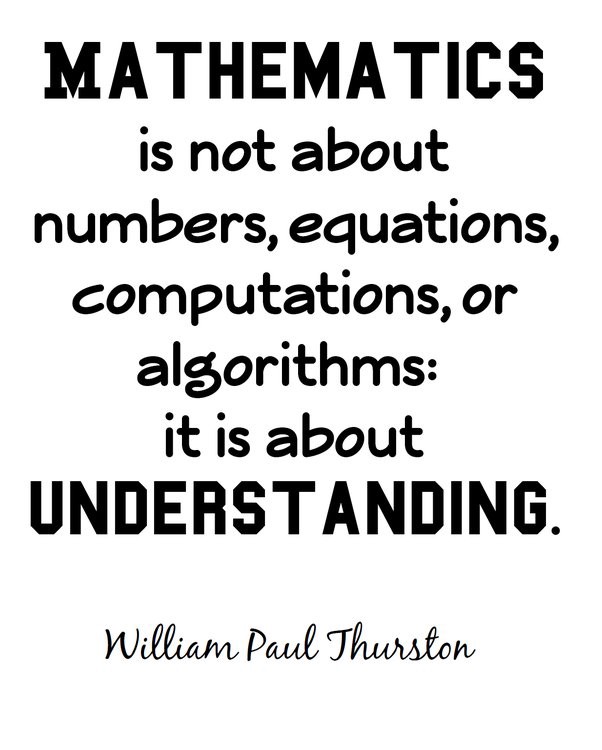
As a mathematician, what would you like to see change about the way mathematics is taught at pre-university level?
I would like to see a distancing from numbers and an emphasis on reasoning. When I was a kid, I had a Soma Cube. It’s a set of 7 pieces that can be assembled into a cube in many ways. There are thousands of other forms that can be constructed from the 7 pieces. This was a great way for me to learn how to reason about and construct shapes. I didn’t know it at the time, but the Soma Cube was my entry into mathematics. There are essentially no numbers in that reasoning. It’s about relationships. I think that graph theory could be taught to young children. This exercises mathematical reasoning without getting bogged down in numbers or arithmetic. If kids can separate math from arithmetic, math becomes less threatening and more available to them.
Lawson, Jamie. “As a mathematician, what would you like to see change about the way mathematics is taught at pre-university level?” 2023. Quora. https://qr.ae/prjtnd.
Why is math hard for most people?
I am currently a PhD student in mathematics and I have done a lot of tutoring/teaching math over my college career. One of the biggest issues that I’ve noticed in my classmates and students that struggle with math is this: They view math as memorizing a bunch of formulas and applying them. This is often how they were taught, and it’s horrible! To show the difference, let me give an example of the two ways that a simple concept can be taught:
Way 1:
The teacher states area formulas for the following: equilateral triangles, squares, rectangles, right triangles, regular hexagons. These are all pretty basic shapes, but their area formulas are decently different at first glance.
Way 2:
The teacher shows visually why a rectangle’s area is equal to its width times its height, by showing a diagram like this
The students can clearly see that there are 15 squares, which is the area. By doing a couple more examples, students will realize that the area can be found by multiplying the side lengths.
From here, the teacher can have students come up with the formula for a square based on the rectangle area formula, since squares are just special rectangles.
At this point, the students are also capable of finding the area formula for right triangles; by noticing that two of the same right triangle put together make a rectangle. Thus the area of the triangle is one half the area of the rectangle. That is, Area(right triangle) = (1/2)*base*height.
Next, let’s memorize one formula (the teacher could go more into depth explaining how to obtain this, but for now it may be easier to memorize).
The area of an equilateral triangle (a triangle with all side lengths the same) is x2 × (√3)/4 where x is the side length.
From here, the students can construct the area formula for regular hexagons (a 6 sided shape with every side the same length and angle the same), as a regular hexagon with side length x is just 6 equilateral triangles put together (each with side length x).
Thus the area of the regular hexagon is six times the area of each equilateral triangle, i.e. 6x2 × (√3)/4, or 3x2 × (√3)/2 when reduced.
The difference between these lessons is that, in the first lesson, students are given 5 seemingly different equations to memorize. If they forget one of the equations, they will have NO way of doing related problems! This can be extremely frustrating, especially for younger students. Students who are taught like this get bored with math because there doesn’t seem to be any point to what they’re learning- each fact seems isolated and uninteresting.
Students who learn from lessons like the second one, however, are learning to THINK not memorize. Students in the second lesson only have to memorize one formula! Any of the other formulas, they can recreate themselves during a test or on homework. They will also be able to come up with formulas for other shapes, such as octagons or parallelograms. Students in lessons like these will build connections between the seemingly different branches of math and learn to see some of the cool intricacies within math.
Of course, it also helps if teachers connect math to the real world; simply learning the area formulas for different shapes may seem pointless to some students. But if the teacher explains how this could be used, it might stick in a kid’s head better! For example, students could consider what the perimeter (side lengths) of different shapes were with the same area (i.e., if a square and a circle have the same area, what are the perimeters of each?). The teacher could then explain how this comes up in nature sometimes; for example, bubbles take on a sphere shape because it minimizes the surface area (analogous to perimeter) per volume (analogous to area). The teacher could bring in bubbles and a variety of tools (like hangers folded into different shapes) to show that, no matter what shape the bubble wand is, the bubbles always snap back into a sphere. This relates to what they’re learning in class because they’ll see that circles (the 2d versions of spheres) also minimize perimeters.
Moore, Samantha. “Why Is Math Hard For Most People?” 2023. Quora. https://qr.ae/prdP59.
The Butterfly Method In Fractions
From TeachableMath2: “In our opinion, tricks like the butterfly method should be avoided when students are first introduced to fractions. There are several reasons, e.g.,
- There is no conceptual understanding in the instruction.
- It reinforces the belief that fractions is just a bunch of tricks.
- What happens if you add three or more fractions?”
If we teach students conceptually how to add and subtract functions with unlike denominators using both models, as shown below, and the least common denominator (LCD) method (on the MathIsFun webpage4), then students will understand addition and subtraction of fractions as joining and separating parts referring to the same whole.

Vedic Math Tricks
Let’s start with an example from the Vedicfeed5 website:
Sutra 3. Urdva – Triyagbhyam
Vertically and crosswise: For multiplication of any two two-digit numbers, using 45 x 87 as an example:
Step 1: Multiply the last digits of the two numbers.
5 x 7 = 35
Step 2: Multiply numbers diagonally and add them.
(4 x 7) + (5 x 8) = 28 + 40 = 68
Step 3: Place Step 1 at the end and Step 2 at the beginning.
68 | 35
Step 4: Multiply the first digit both numbers and put it at the beginning.
4 x 8 = 32
32 | 68 | 35
Step 5: For the final result (i.e., the product), more than 2 or more digits, add the beginning digits to the beginning numbers.
45 x 87 = 32 | 68 | 35 = 32 | 68 + 3 | 5 = 32 | 71 | 5 = 32 + 7 | 15 = 3915
What is the bottom line?
- I agree with Cuemath: “However fascinating it might be to calculate faster using Vedic mathematics tricks, it fails to make a student understand the concepts, applications, and real-life scenarios of those particular problems.”
- According to the Vedantu website Vedic Mathematics is needed to pass tests (e.g., JEE, ICSE and CBSE).
- To enrich a student’s understanding of mathematics, Vedic Mathematics should be introduced once the student understands why these methods work and when they can be applied.
- Even if the person is not a genius and still can’t get it, those who post math tricks should be sure post the solution so the user can learn a technique that can be used to solve those types of problems.
“8 Vedic Maths Tricks: Calculate 10x Faster”. 2021. Vedantu. https://www.vedantu.com/blog/vedic-maths-tricks.
What Is Meant By Vedic Mathematics?
The term ‘Vedic’ came from a Sanskrit word ‘Veda’, that means ‘Knowledge’. And, Vedic Math is a super collection of sutras3 to solve math problems in a faster & easy way.
What Are The Benefits Of Learning Vedic Mathematics?
You can solve any difficult/ time-consuming JEE problem or ICSE/CBSE Math immediately using Vedic Math Tricks. Moreover, just by using Vedic Math you can solve a problem mentally and that’s the beauty of Vedic Maths. While you encounter polynomial functions & quadratic sums in a higher class in CBSE or ICSE Board, knowledge of Vedic Math will lend a helping hand to beat the difficulty level of those sums.
“Vedic Maths| Tricks And Importance”. 2021. Cuemath. https://www.cuemath.com/learn/vedic-maths-tricks/.
Vedic Maths is a collection of techniques/sutras to solve mathematical problem sets in a fast and easy way. These tricks introduce wonderful applications of Arithmetical computation, theory of numbers, mathematical and algebraic operations, higher-level mathematics, calculus, and coordinate geometry, etc.
It is very important to make children learn some of the Vedic maths tricks and concepts at an early stage to build a strong foundation for the child. It is one of the most refined and efficient mathematical systems possible.
Vedic maths was discovered in the mid-1900s and has certain specific principles to perform various calculations in mathematics. But the question that arises is that is mathematics only about performing calculations?
However fascinating it might be to calculate faster using Vedic mathematics tricks, it fails to make a student understand the concepts, applications, and real-life scenarios of those particular problems.
Cube Root Trick
I have seen the Special Cube Roots trick on a number of different personal Instagram accounts and presented in different ways. Interesting trick but raises the following questions.
- How do you tell if a number is a perfect cube, e.g., 19683, so you can use the trick shown below? This is not mentioned in the posts.
- Where and when would you use this trick?
- Is it worth teaching?

“How To Calculate The Cube Root Of Any Number Easily Without A Calculator (Vedic Maths Trick) – Fully Electronics”. 2020. Fully Electronics. https://fullyelectronics.com/how-to-calculate-cube-root-of-any-number-easily-without-calculator-vedic-maths-trick/.
This article discusses the short trick to find out the cube root of a perfect cube in less than 5 seconds without the use of a calculator.
This math trick allows you to work out the cube root of any number – NOT JUST PERFECT CUBES – instantly. With decimals. With ease. Can you work faster than a calculator? With this tecmath trick you just might! The math shortcut magic is back!
Only a Genius
Or 99% of the people fail to answer. Here is an example that is written on a white board on which the viewer is asked to solve.
1 + 4 = 5
2 + 5 = 12
3 + 6 = 21
8 + 11 = ?
However, the Instagram post does not tell you how the trick is done! One way to answer the question is shown below, which is basically using a defined function: f( x, y ) = ( x * y ) + x
1 + 4 = 5 = (1 * 4) + 1
2 + 5 = 12 = (2 * 5) + 2
3 + 6 = 21 = (3 * 6) + 3
8 + 11 = ? = (8 * 11) + 8 = 96
The above can also be solved in another way by seeing that the pattern is the sum of the two numbers plus the previous sum, i.e.,
1 + 4 = 5
2 + 5 + 5 = 12
3 + 6 + 12 = 21
4 + 7 + 21 = 32
5 + 8 + 32 = 45
6 + 9 + 45 = 60
7 + 10 + 60 = 77
8 + 11 + 77 = 96
Remember, as with other sequences/patterns, a minimum of three items are need to establish a pattern.
Bottom Line
Teaching is more than filling your student’s brains with tricks and facts, or getting students to memorize content and pass tests. Teaching is about creating thinkers and helping them to understand the why along with the how.
“The mind is not a vessel to be filled, but a fire to be ignited.”
Plutarch
References
1 “The Mad Book Of Magic And Other Dirty Tricks : Jaffee, Al : Free Download, Borrow, And Streaming : Internet Archive”. 2021. Internet Archive. https://archive.org/details/madbookofmagicot00jaff.
2 “The Butterfly Method In Fractions And The Danger Of Overemphasizing Tricks – TeachableMath”. 2016. TeachableMath. https://teachablemath.com/butterfly-method-fractions-danger-overemphasizing-tricks/.
3 “16 Sutras, Or Mathematical Formulas, Found In The Vedas”. 2021. Learn Religions. https://www.learnreligions.com/vedic-math-formulas-1770680.
Vedic Math essentially rests on the 16 Sutras, or mathematical formulas, as referred to in the Vedas. (The Vedas are most ancient Hindu scriptures, written in early Sanskrit and containing hymns, philosophy, and guidance on ritual for the priests of Vedic religion. Believed to have been directly revealed to seers among the early Aryans in India, and preserved by oral tradition, the four chief collections are the Rig Veda, Sama Veda, Yajur Veda, and Atharva Veda.)
4 “Least Common Denominator”. 2021. mathsisfun.com. https://www.mathsisfun.com/least-common-denominator.html.
Uses pizza slices to demonstrate how to calculate the smallest number (LCD) that can be used for all denominators of 2 or more fractions.
5 “25+ Vedic Maths Tricks In Simplified Version”. 2017. Vedicfeed. https://vedicfeed.com/vedic-maths-tricks/.
Additional Reading
Muller, Gretchen. 2022. “George Polya”. cmc-math.org. https://www.cmc-math.org/george-polya.
Dr. Polya was a distinguished mathematician and professor at Stanford University. Polya (1887-1985) made important contributions to probability theory, number theory, the theory of functions, and the calculus of variations. He was the author of the classic works How to Solve It, Mathematics and Plausible Reasoning, and Mathematical Discovery, which encouraged students to become thoughtful and independent problem solvers. He was an honorary member of the Hungarian Academy, the London Mathematical Society, and the Swiss Mathematical Society, and a member of the (American) National Academy of Sciences, the American Academy of Arts and Sciences, and the California Mathematics Council, as well as a corresponding member of the Academie des Sciences in Paris.
⭐  Lim, Russell. “Cool Multiplication Trick — Can You See Why It Works?”. 2023. Medium. https://www.cantorsparadise.com/cool-multiplication-trick-can-you-see-why-it-works-ed412b674202.
Multiplication can be done by drawing diagonal lines and counting their intersection points…

The diagram above shows how to set up the multiplication 32 × 24. The pink lines represent 32 (3 pink lines for the tens digits, then 2 pink lines for the unit digits). The blue lines represent 24 (2 blue lines for the tens digits, then 4 blue lines for the units digits).
⭐ I suggest that you read the entire reference. Other references can be read in their entirety but I leave that up to you.
Medium Member Only
The featured image on this page is from the eBay website.
 Mathematical Mysteries